New Book – The Appraisal of Real Estate, 14th Edition

The newest edition of the appraisal bible, “The Appraisal of Real Estate, 14th Edition” is being released in mid-September 2013.  It’s a book that will act as the Gold Standard for real estate appraisers worldwide.

According to the Appraisal Institute, it will be available for the first time in digital formats: as a PDF in September 2013 and in E-pub and Kindle formats in January 2014!

It is an essential text if you are in the appraisal field, or engage appraisers in your practice:

http://www.appraisalinstitute.org/14thedition/

The Appraisal of Real Estate - 14th Edition

UPDATE: The Appraisal Institute just released the table of contents for the 14th Edition.

You can download the PDF here: The Appraisal of Real Estate 14th Edition – Table of Contents

I’m looking forward to Chapter 14, “Statistical Analysis in Appraisal”–it appears to be new in this edition.

Table of Contents
Foreword – ix
Acknowledgments – xi

PART I Real Estate and Its Appraisal
Chapter 1 Introduction to Appraisal – 1
Chapter 2 Land, Real Estate, and Ownership of Real Property – 11
Chapter 3 The Nature of Value – 19
Chapter 4 The Valuation Process – 35

PART II Identification of the Problem
Chapter 5 Elements of the Assignment – 49
Chapter 6 Identifying the Type of Value and Its Definition – 57
Chapter 7 Identifying the Rights to Be Appraised – 69

PART III Scope of Work Determination
Chapter 8 Scope of Work – 87

PART IV Data Collection and Property Description
Chapter 9 Data Collection – 95
Chapter 10 Economic Trends in Real Estate Markets and Capital Markets – 129
Chapter 11 Neighborhoods, Districts, and Market Areas – 163
Chapter 12 Land and Site Description – 189
Chapter 13 Building Description – 219

PART V Data Analysis
Chapter 14 Statistical Analysis in Appraisal – 275
Chapter 15 Market Analysis – 299
Chapter 16 Highest and Best Use Analysis – 331

PART VI Land Value Opinion
Chapter 17 Land and Site Valuation – 359

PART VII Application of the Approaches to Value
Chapter 18 The Sales Comparison Approach – 377
Chapter 19 Comparative Analysis – 397
Chapter 20 Applications of the Sales Comparison Approach – 427
Chapter 21 The Income Capitalization Approach – 439
Chapter 22 Income and Expense Analysis – 463
Chapter 23 Direct Capitalization – 491
Chapter 24 Yield Capitalization – 509
Chapter 25 Discounted Cash Flow Analysis and Investment Analysis – 529
Chapter 26 Applications of the Income Capitalization Approach – 541
Chapter 27 The Cost Approach – 561
Chapter 28 Building Cost Estimates – 581
Chapter 29 Depreciation Estimates – 597

PART VIII Reconciliation of the Value Indications and Final Opinion of Value
Chapter 30 Reconciling Value Indications – 641

PART IX Report of Defined Value
Chapter 31 The Appraisal Report – 649

PART X Appraisal Practice Specialties
Chapter 32 Appraisal Review – 671
Chapter 33 Consulting – 683
Chapter 34 Valuation for Financial Reporting – 689
Chapter 35 Valuation of Real Property with Related Personal
Property or Intangible Property – 703

ADDENDA
Appendix A Professional Practice and Law – 717
Appendix B Regression Analysis and Statistical Applications – 733
Appendix C Financial Formulas – 753
Bibliography – 797
Index – 819
Is that thing a “fixer upper” or a “tear down”?

Today a friend asked me how real estate appraisers value properties that are in “below average” condition.  He wanted to know if we valued them in their “as is” condition, and whether or not repair costs were factored in.

In essence, how do you know if a property is a “fixer upper” or a “tear down”?

In a nutshell:

  1. If a property is in poor condition, an appraiser considers whether or not the value of the real estate, in its “as is” condition, exceeds the value of the underlying land.
  2. An appraiser determines this by analyzing the cost to repair the building to typical/average condition, and comparing the net value against the value of the underlying land, less demolition costs.

In detail:

It’s a relatively simple process, the appraisal buzzwords associated with this valuation method are “highest and best use” and “cost to cure”.

To demonstrate the analysis, I went on the Honolulu MLS and found a commercial property built in 1959, the same year Hawaii became a State.

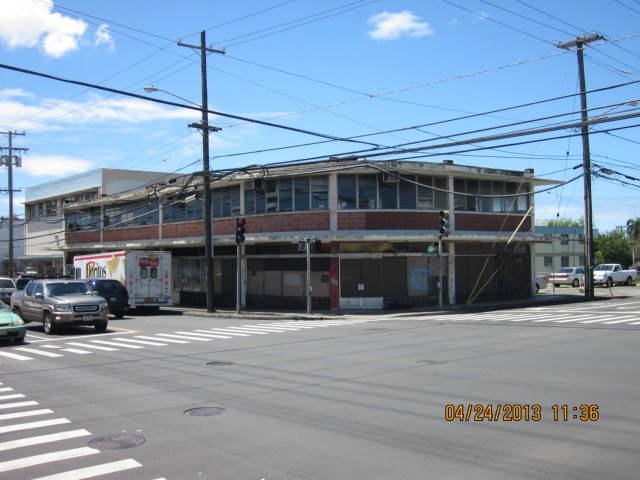
Here, in all of its glory, is the poor condition (according to MLS)  office / retail property known as “1339 North School Street”:

1339 North School Street

1339 North School Street, Honolulu, Hawaii

A bunch of appraiser math/mumbo-jumbo below, skip to the chart at the end to see the answer.

For our purposes, the asking price is irrelevant, especially because the listing includes additional land parcels.  The figures used below are part of a simplistic appraisal demonstration only.

Let’s assume an appraiser determines that vacant land in the subject neighborhood is worth $100 per square foot.  Similarly, let’s assume average/typical commercial buildings are selling for $300 per square foot of building area.  The values would compare as shown below.

HYPOTHETICAL APPRAISED VALUES – 1339 N. School St.
Item Area in Square Feet Value Per Square Foot Total Value
Vacant Land 20,000 $100 $2,000,000
Less: Demolition Costs     -$100,000
Equals: Property Value   $1,900,000
       
Average Condition Building 7,500 $300 $2,250,000
    Difference $350,000

Since the value of an average condition building “as improved” is worth more than the property “assuming demolition”, we proceed to the next step: determining the value of the building in poor condition (its “as is” condition).

HYPOTHETICAL APPRAISED PROPERTY VALUE – COST TO CURE
Item Building Area
in Square Feet
Building Value
Per Square Foot
Total Value
Average Condition Building 7,500 $300 $2,250,000
Less: Cost to repair to average condition   -$500,000
Equals: Poor Condition Property Value   $1,750,000

Let’s assume a reputable contractor estimated the construction/repair cost necessary to renovate the subject building to “average” condition to be $500,000.  This amount is deducted from the “if in average condition” building value to arrive at the value of the overall property in poor condition of $1.75 million.

So, where are we at?

How does land value (assuming demolition) compare to property value (assuming renovation)?

HYPOTHETICAL APPRAISED VALUES – HIGHEST AND BEST USE
Item Total Value
Land Value Assuming Demolition $1,900,000
   
Poor Condition Property Value $1,750,000
Yep, it's a tear down.

Yep, it’s a tear down.

In this hypothetical scenario, the value of the underlying land, even after deducting demolition costs, exceeds the value of the poor condition property “as is”.  Therefore, the highest and best use of the property is demolition of the built-in-1959 (54 year old) improvements to make way for new development.

Questions, comments?  Please leave them in the comment box, I would be happy to clarify and/or expand.

Aloha, Chris

Hawaii Four Seasons Hotels – A resort real estate appraiser’s friend when data is tough.

Imagine you’re an appraiser in Hawaii, and you’re given the enviable task of appraising an oceanfront homesite in the Manele Resort on Larry Ellison’s island of Lanai.

There are only eleven oceanfront lots currently developed in the resort (as shown roughly in the aerial below) and only one lot has sold in the last decade (Lot 130, for $3,612,500 in May 2011):

Lanai Oceanfront with Parcel Shapes

Manele Resort – Eleven Oceanfront Homesites
Photo Source: Bing Maps

The sale of Lot 130 is a godsend, but other than that, what is an appraiser to do for comps?

We can’t very well do a one comparable appraisal: We’ve got to go off island.

Two resort areas of the State of Hawaii that are similar to Manele Bay in terms of climate and resort appeal are Wailea (Maui) and Hualalai (Big Island).  All three neighborhoods have oceanfront homesites that could potentially provide sale comparables, and all three master planned communities are home to a prestigious Four Seasons resort!

Four Seasons Manele Bay

Four Seasons Manele Bay

Four Seasons Hualalai

Four Seasons Hualalai

Four Seasons Wailea

Four Seasons Wailea

What gives? Being (arguably I’m sure) the most prestigious hotel operator (“flag”) in the State of Hawaii, Four Seasons resort properties must meet certain strict criteria in order to qualify as a potential member of the brand.  Each of the three resorts on Lanai (Manele), Maui (Wailea), and the Big Island (Hualalai) are world class hotels that were constructed between 1989 and 1996, and have been well maintained in the interim.   As such, the physical plant of each resort should have reasonably similar cost/value attributes. (The Hualalai resort is a newer “bungalow-style” design that likely has more market appeal)

Under the assumption that each of the three properties benefit from first class or better improvements, differences in room rates likely capture a good portion of the market’s preference for a specific location/resort.  For an appraiser starved for data in a highly-unique sub-market like Manele Bay/Lanai, hotel room rates can provide much needed market support for potential location adjustments.

Consider the following:

FOUR SEASONS – HAWAII OCEANFRONT RESORTS 
Best Available Room Rate – August 19, 2013
Island Resort Hotel Name Year Built Room Rate
Big Island Hualalai Four Seasons Resort
Hualalai at Historic Kaupulehu
1996 $920
Maui Wailea Four Seasons Resort
Maui at Wailea
1989 $595
Lanai Manele Four Seasons Resort
Lana’i at Manele Bay
1989 $459

That’s right, the best available room rate at the Four Seasons Hualalai is DOUBLE the same at Manele Bay!

The following chart shows the relationship of each hotel to its Manele cousin, and the indicated adjustment to equate each room rate to Manele:

Downward appraisal adjustments of 23 percent (Wailea) are serious business, never mind 50 percent allowances (Hualalai).  But for the appraiser who is digging deep for market support for a location adjustment, comparative hotel room rates are an interesting value indicator to consider.  In a future article I’ll examine the three neighbor island resorts in greater detail and see if these price relationships hold.

Questions, comments?  Please leave them in the comment box, I would be honored to clarify and/or expand.

Aloha, Chris

Correlation, Schmorrelation!

WARNING: We’re going DEEP into real estate appraiser-geek-land!

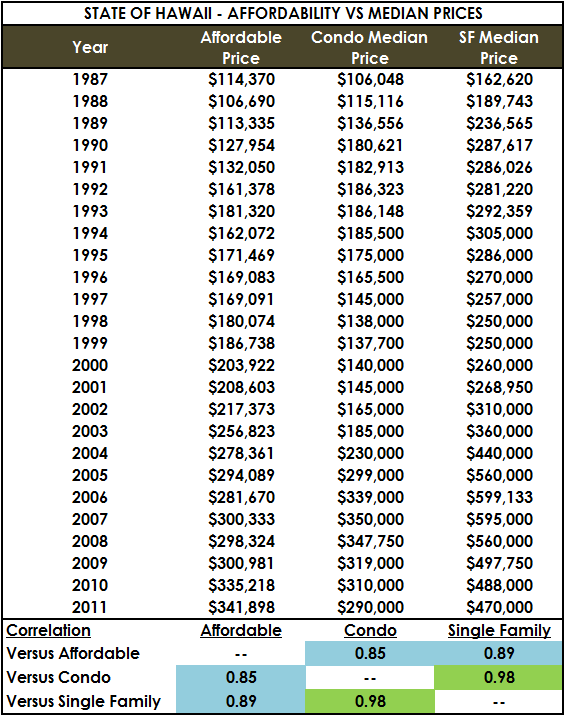
A couple of articles ago, I looked at the relationship between housing affordability in Hawaii and The Aloha State’s median prices for single family homes and condominiums.

You might recall this chart, which compares Hawaii trends from 1987 through 2011:

Hawaii Home Affordability vs Median Prices

The purpose of this article is to dig deeper into explaining how the affordable price trend, while obviously headed in the same general direction as Hawaii median price trends, does not necessarily correlate with them mathematically on a year to year basis.

As I said in my earlier post:

The red and green trendlines track single family and condominium prices in the study period–as shown, condos and single family home prices track pretty well.

How about affordability (the purple trendline) based on interest rates ?

The long term trend is clearly positive for all variables, with affordable price, condo price, and single family price all being about 3x higher in 2011 than they were in 1987.

But that’s not the question most folks are asking.  The market participants I talk to are generally trying to answer the question “If interest rates go up (this year, or next year), will prices go down (this year, or next year)?”  Is it a causal relationship?

What do you think?  Personally, beyond long term growth, I don’t see a strong relationship in the data, and neither is a solid correlation revealed in geeky statistical analyses.

The people want to know: If interest rates go up (which means affordability goes down), does that mean prices go down?

I warned you, Hawaii real estate appraiser geek stuff:

Let’s just get this out of the way before I get a bunch of emails from anal appraisers: Correlation does not prove Causation.  For a quick explanation of the difference, please consult one of my idols, Sal Khan.

Now that we all agree that correlation does not prove causation (just because healthy people eat breakfast doesn’t mean eating breakfast makes you healthy), let’s move on to the question of whether interest rate changes correlate with movement in Hawaii single family and condominium median prices.

Correlations, positive or negative, can be weak or strong.

Positive correlations are assigned a score between 0.00  and 1.00.   A  zero score (0.00) means there is no correlation (the weakest measure). A score of 1.00 is a perfect positive correlation (the strongest measure).  As the correlation gets closer to 1.00, it is getting stronger. So, a correlation of 0.75 is stronger than 0.55, and a 0.35 is weaker than a 0.45.

Let’s look at the raw numbers first:

State of Hawaii Median Prices versus Affordability

CORREL - Hawaii Home Affordability vs Median Prices


As shown in the table and graph, affordability numbers, over the long haul, have a pretty good correlation with long term trends (highlighted in blue), scoring a 0.85 against condominium median prices and a 0.89 against single family median prices.

Pretty impressive!  But easily trumped by the 0.98 score logged by condos against single family prices! (highlighted in green)

In this analysis, over the long term, affordability is absolutely heading in the same direction, and in a “kinda-sorta” similar magnitude, as median residential prices.

“But that’s not the question most folks are asking.”

How about my earlier idea, that what market participants really want to know is: “If interest rates go up (this year, or next year), will prices go down (this year, or next year)?”  Is it a causal relationship?

The way to test this question is shown below.  How does the “year over year” percent change in affordability track with the same year’s percent change for residential product?

State of Hawaii Median Prices versus Affordability Percent Change

The blue lines don’t match so well with the red and green.

CORREL - Hawaii Affordability Change vs Median Change

Take another look at the affordable versus condo/single family correlations.  Not Pretty.

How about condo versus single family?  Still going strong!

Conclusion?

There is absolutely no doubt that interest rates and overall home affordability head in the same “long term” direction as median prices.  But if you are a real estate appraiser and are asked to opine on the idea of whether or not interest rates/affordability track with median prices, think carefully before knee-jerking your response.  I say “not so much”, at least in Hawaii.

Questions, comments?  Please leave them in the comment box below, I would be honored to clarify and/or expand.

Aloha, Chris

Proposed Honolulu Condo Towers – The List of 12

These days in Hawaii, one of the most common topics real estate appraisers are confronted with is: “Have you heard about that new tower they announced in Kakaako?”

Very often, I’m asked for specifics about a new high rise condominium development in Honolulu.  I decided to compile a concise list.

There is an enormous amount of development activity happening in Hawaii right now, especially in urban Honolulu.  Major developers, lenders, and landowners are involved, including: Alexander and Baldwin (A&B), Howard Hughes Corporation, The MacNaughton Group, Kobayashi Group, OliverMcMillan, Tradewind Capital, Kamehameha Schools, Stanford Carr, American Savings Bank, Bank of Hawaii, Central Pacific Bank, Wells Fargo, and First Hawaiian Bank.

As I started to put this list together, I quickly realized that the variety of residential projects being planned was staggering: High-rise condos, student housing, timeshare, hotel, high-rise apartments, low-rise condominiums, senior housing, and even affordable housing for artists!

Here are the parameters for inclusion in this article:

  • High-Rise Construction
  • Fee Simple Condominiums
  • Whole Ownership (No Timeshare)
  • An active development plan on track for approvals, financing, and construction.

12 Oahu towers made the cut, a total of 4,166 proposed units–web links and a brief summary of each project is included below:

2013 PROPOSED / COMPLETED HIGH RISE CONDOMINIUM TOWERS
Oahu, Honolulu, Hawaii
# Tower Name (click name) Stories Units Status / Timing
1 Holomua 23 176 Completed: Early 2013 
2 Waihonua at Kewalo 43 341 Under Construction
Completion: 2014 of 2015
3 ONE Ala Moana 23 210 Under Construction
Completion: Late 2014
4 Symphony Honolulu 45 388 Groundbreaking: Late 2013
Completion: 2015
5 801 South Street 46 635 Groundbreaking: “Mid-2013”
6 Ritz-Carlton Residences,
Waikiki Beach
36 309 Groundbreaking: Late 2013
Completion: 2016
7 The Collection
(3 buildings, 1 high rise)
43 460 Groundbreaking: Mid to Late 2014
Completion: Late 2016 to 2017
8 404 Ward Ave 38 424 Groundbreaking: Early 2014
Completion: 2016
9 Keauhou Lane in Kakaako 40 600 Groundbreaking: Mid to Late 2014
10 Aloha Kai 39 128 Completion: 2016
11 “Fishnet Tower” 38 177 Proposed
12 “Wave Tower” 38 318 Proposed
Compiled by: Chris Ponsar, MAI   4,166 Total Units

The map below shows the location of each project in urban Honolulu:

Oahu Condo Project Map - Chris Ponsar, MAI

Click HERE to view details in Bing Maps

This link: http://binged.it/13RCPpX takes you to an interactive Bing Map that shows photos and details of each project.  As shown, most of the activity is in Kakaako.

Want more details?

Here you go:

Proposed Honolulu Condo Towers - Detail

CLICK CHART TO ENLARGE

Comments and/or Questions?  Please leave them in the comments section below–I’d be happy to clarify or expand.

Aloha, Chris

Interest Rates and Hawaii Residential Prices–Are They Really Connected?

I posted an article a few days ago that examined the theoretical relationship between interest rates and purchasing power.  The calculations beg the question “are interest rates and Hawaii home prices actually connected?”

Logic says “of course!”, the data suggests “not so much!”

Let’s assume a 20 percent down payment, market loan fees (points), and monthly payments of 35 percent of a household’s gross income.

The following chart shows State of Hawaii median income, condominium median prices, single family median prices, and national average interest rates for 30-year mortgages from 1987 through 2011 (the latest year for which all data points are available).

Sources: U.S. Census Bureau, Freddie Mac, Hawaii State Data Book, and Chris Ponsar, MAI

Based upon the income and interest rates shown, the median Hawaii family could afford a monthly payment of $1,021 in 1987, and $1,722 in 2011.  These payments equate to affordable home prices of $114,370 in 1987, and $341,898 in 2011. (A pretty hefty increase in purchasing power, driven largely by lower interest rates)

Lets see how the figures track with historic price fluctuations in the Hawaii residential real estate market.

Hawaii Home Affordability vs Median Prices

The red and green trendlines track single family and condominium prices in the study period–as shown, condos and single family home prices track pretty well.

How about affordability (the purple trendline) based on interest rates ?

The long term trend is clearly positive for all variables, with affordable price, condo price, and single family price all being about 3x higher in 2011 than they were in 1987.

But that’s not the question most folks are asking.  The market participants I talk to are generally trying to answer the question “If interest rates go up (this year, or next year), will prices go down (this year, or next year)?”  Is it a causal relationship?

What do you think?  Personally, beyond long term growth, I don’t see a strong relationship in the data, and neither is a solid correlation revealed in geeky statistical analyses.

Why isn’t the correlation better?

Higher interest rates do equate to lower affordability for a particular household, but why doesn’t that relationship translate well into median prices?

A few suggestions:

  1. Median prices are not the best way to measure market trends–overall dollar volume and the raw number of sales may provide more insight (and material for a future article)
  2. Hawaii’s population continues to grow faster than new housing units are developed–fundamental demand grows incrementally in both good times and bad. (Which explains the overall upward trend in prices, but not the ups and downs in particular years)
  3. When monthly payments go up, families still need shelter.  For those families contemplating a home purchase, spending on discretionary items will likely suffer first (say vacations or luxury items)–these spending habit adjustments allow families to absorb a certain amount of extra monthly payment caused by increased interest rates.
  4. When prices start to decline, sellers may opt not to put their home on the market.  Financially stable homeowners can afford to “hold out” for their desired price, which restricts supply, and in turn has a stabilizing effect on prices.

Frankly, when I began researching the data for this article, I expected to see a pretty reasonable relationship between affordability and median prices–instead, we see that from the perspective of a current homeowner, prices appear not to fluctuate on a “dollar for dollar” basis with interest rates. From an appraiser/appraisal perspective, it is imperative to observe how the market reacts to the rising rates that are currently anticipated, not just automatically assume lower prices if interest rates rise.

Comments and/or Questions?  Please leave them in the comments section below–I’d be happy to clarify or expand.

Aloha, Chris

Rising Interest Rates = Decreasing Purchasing Power?

bernanke_ben

Fed Chairman Ben Bernanke

As early as March 1 of this year, the Fed began to hint at increasing interest rates.  Now, financial markets globally are pondering the same.

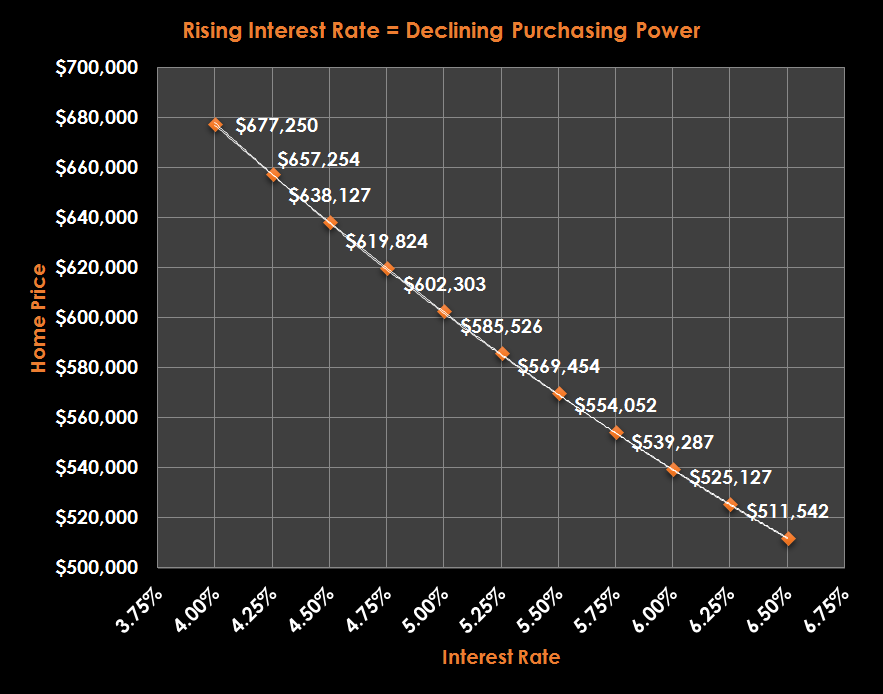
What would an increase in interest rates do to home purchasing power in Hawaii?  Consider the following graph:

Rising Interest Rate Declining Purchasing Power

Graph Credit: Nate Alexander

As of June 2013, the median single family home price on Oahu was $677,250.  The chart above assumes the median home in the City and County of Honolulu is affordable at a 30-year interest rate of 4.00 percent (30-year fixed, 80% LTV, 33% debt service to income ratio).  Rate increases at intervals of 25 basis points (0.25%) are shown.

The impact of just a one percent increase in interest rates is staggering: The same family making the same income can suddenly only afford only a $602k home–approximately 11 percent less.

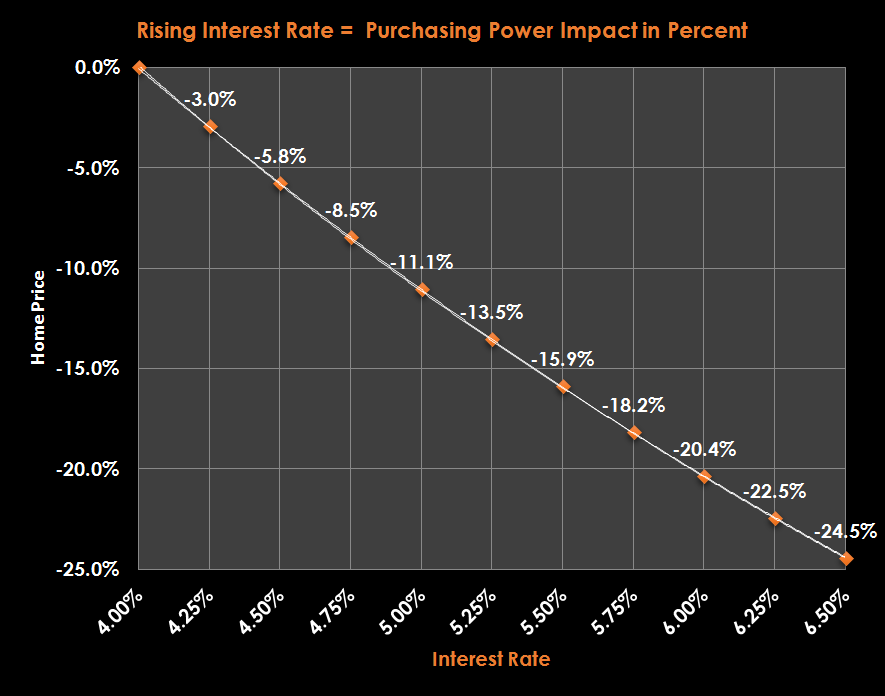
The graph below presents the data in terms of percent:

Graph Credit: Nate Alexander

Graph Credit: Nate Alexander

What if interest rates rose two percent?  The effective purchasing power of the same household would decrease more than 20 percent!  Bear in mind that 30-year interest rates of 6.00 percent are not historically uncommon–when my wife and I purchased our first home in 2005, our rate was 5.625 percent.

Ok.  Shock and Awe.  What’s the point?  Are we going down the tubes?

The point of this article is to show how an increase in interest rates can affect the purchasing power of a particular household, not to predict the impact of rate increases on median prices (or the price of your home).  In other words, if you can afford a $675k house at 4.0% interest, you’ll only be able to buy a $600k home if rates increase just one percentage point–all other factors being equal.

In a future post, I’ll talk about how historic interest rates track (or don’t track) with historic median prices, and how interest rates relate to sales volume (demand).

Comments and/or Questions?  Please leave them in the comments section below–I’d be happy to clarify or expand.

Aloha, Chris

Kapahulu – Diamond Head: Unscathed by the Great Recession?

I was at lunch with a friend this week, and he suggested the idea that home prices in his neighborhood (near Diamond Head) may have escaped the Great Recession altogether and, in fact, appreciated a bit along the way.

While it is common knowledge that the worldwide financial crisis did great damage to real estate prices in much of the United States, Hawaii was impacted less, and it is certainly possible that a desirable sub-market (like the Diamond Head area) could have emerged unscathed.

I decided to check it out.

MLS Local Market Statistics – Kapahulu – Diamond Head

The graph and data table below shows MLS sales statistics for the Kapahulu – Diamond Head area from 2002 through June 2013:

Source: Honolulu Board of REALTORS® and Chris Ponsar, MAI

Source: Honolulu Board of REALTORS® and Chris Ponsar, MAI

The graph clearly shows the amazing run up in prices experienced in the subprime era (pre-2008), with median price peaking at over $800,000 in 2007 (number of sales topped out at 319 in 2004).

A closer look reveals the supply/demand relationship: As the median price continued to climb after 2004, fewer and fewer buyers were pulling the trigger.  Conversely, when median prices bottomed out in 2009, demand began to increase.

The following table analyzes the data a little differently:

Kapahulu - Diamond Head - Year over Year

From the peak of the market in 2007, the Kapahulu – Diamond Head submarket declined four and nine percent in 2008 and 2009, respectively, and about 13 percent overall, before recovering a bit in 2010.

Considering these figures, it looks like my friend’s neighborhood took a moderate price hit after the collapse of Lehman Brothers….but our work isn’t done.

Wait a minute.  Kapahulu – Diamond Head, that’s kind of a mixed bag, isn’t it?

It is.  And as it turns out, much more mixed than I originally thought.

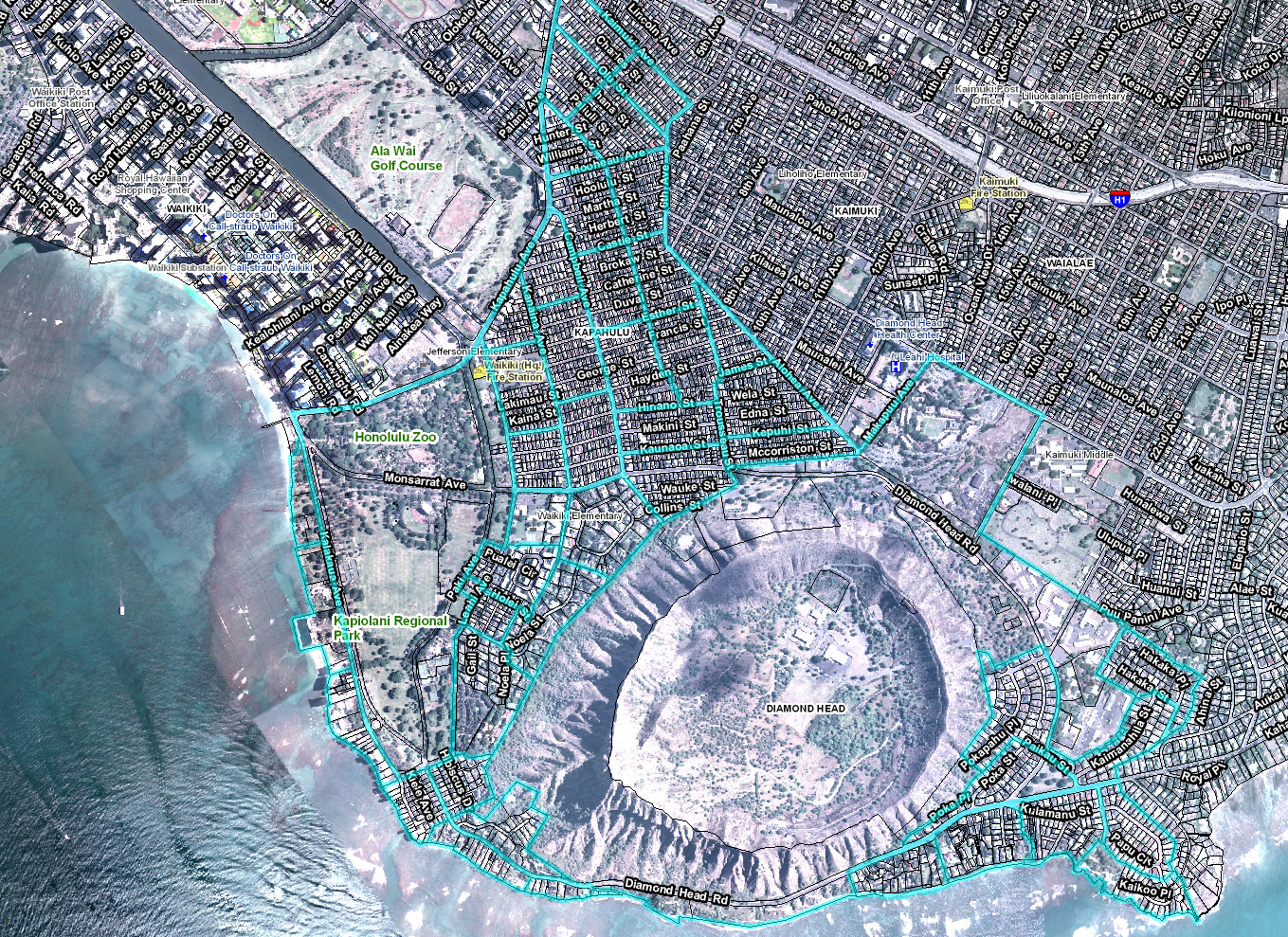
The Honolulu Board of REALTORS®  defines the Kapahulu – Diamond Head Local Market Area as including sections (1) 3-1 through (1) 3-4.  The map below approximates the boundaries of this area.

Sources: Bing Maps, City and County of Honolulu DPP, and Chris Ponsar, MAI

Sources: Bing Maps, City and County of Honolulu DPP, and Chris Ponsar, MAI

As you can see, the following neighborhoods are included in this statistical area:

  • Kapahulu
  • Diamond Head
  • Kaimuki
  • Wilhelmina Rise
  • St. Louis Heights
  • Palolo

If you’re familiar with Honolulu, you’ll quickly realize that is quite a diverse spread of neighborhoods!  Great aloha to be had everywhere, but buyers looking to purchase around Diamond Head might not consider the other areas to be substitutable options.

Could my friend be right?  Is it possible that his neighborhood (Diamond Head) is a micro-market that survived the Great Recession better than the other areas in his MLS Local Market?  It makes logical sense that a desireable location like Diamond Head could have bucked the trend–let’s dig deeper.

Time to bring out the big guns – Paired Sales Analysis

My friend lives in Section (1) 3-1, which is shown on the maps below:

City and County of Honolulu, Department of Planning & Permitting

City and County of Honolulu, Department of Planning & Permitting

City and County of Honolulu Tax Map - First Division, Zone 3, Section 1

City and County of Honolulu Tax Map – First Division, Zone 3, Section 1

Commonly referred to as “Paired Sales” in Hawaii appraisal circles, “Paired Data Analysis” is defined as:

paired data analysis

A quantitative technique used to identify and measure adjustments to the sale prices or rents of comparable properties; to apply this technique, sales or rental data on nearly identical properties is analyzed to isolate and estimate a single characteristic’s effect on value or rent. Often referred to as paired sales analysis.

Source: Appraisal Institute, The Dictionary of Real Estate Appraisal, 5th ed. (Chicago: Appraisal Institute, 2010).

In order to accomplish this, I researched sales activity in Section (1) 3-1 (my friend’s general neighborhood) from 2004 through 2010, focusing on sales of single family homes that were listed by the selling agent as being in “average” or better condition.

My research found 22 “pairings”, single family homes in (1) 3-1 that sold in late 2004, 2005, 2006, or 2007 (the peak of the market), and later resold from September 15, 2008 (Lehman Brothers)  through the end of 2010.  Of these 22 pairings, 10 were substantially remodeled in the interim, and thus not considered.

(1) 3-1 Paired Sales Pie Chart

After the 10 remodeled pairings were removed, 12 “pure” pairings remained–resales of homes that were substantially similar in the time frame being studied.  These 12 sales are analyzed in the chart below:

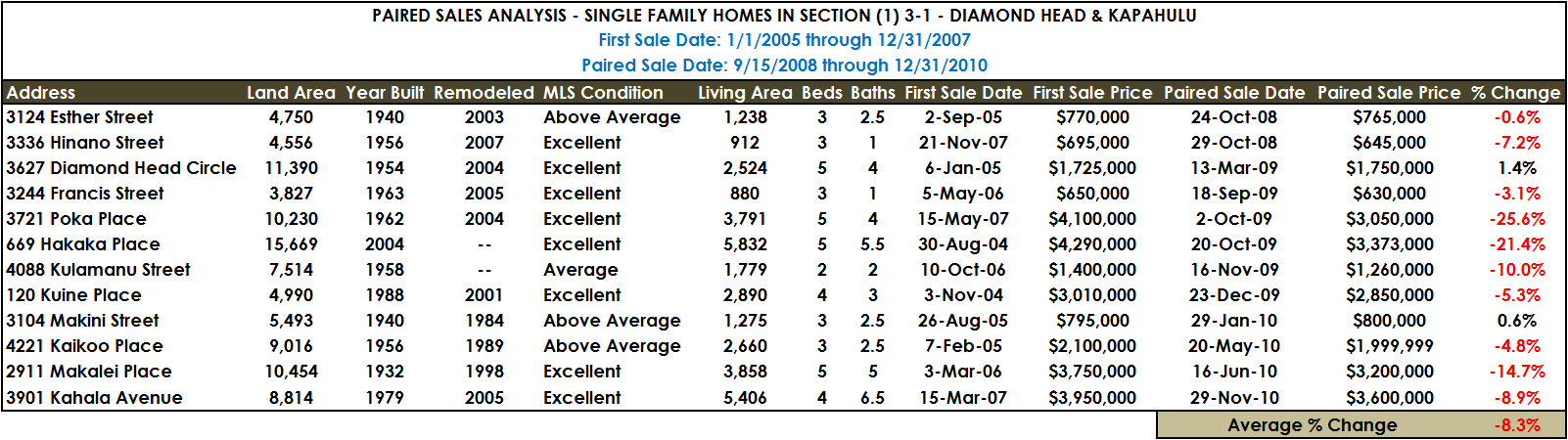
Diamond Head Paired Sales

Click To Enlarge

As you can see, 10 of the 12 paired sales show price declines in the study period, ranging from negative 0.6 percent to negative 25.6 percent.  The two positive indicators showed upward figures of 1.4 and 0.6 percent.  The overall average price change for the 12 “pure” pairings (not remodeled) in Section (1) 3-1 was negative 8.3 percent.

Conclusion: Still looks like a price drop after Lehman Brothers, but not a huge one.

In the end, even though the Kapahulu-Diamond Head MLS statistical zone includes a diverse range of neighborhoods, it appears that the immediate Diamond Head area, like much of the United States, did indeed suffer a setback (negative 8.3 percent according to this analysis) in the early portion of the worldwide financial crisis.

Land Value via the Income Approach – A Quick Primer

If you’re generally familiar with real estate appraisal, you are no doubt aware that the sales comparison approach is the preferred method of valuing land in most situations.

That said, there are other techniques that can be developed: Market Extraction, Allocation, Land Residual, Ground Rent Capitalization, and Discounted Cash Flow Analysis.

The last three procedures in that list are income capitalization techniques–they are the focus of this article.

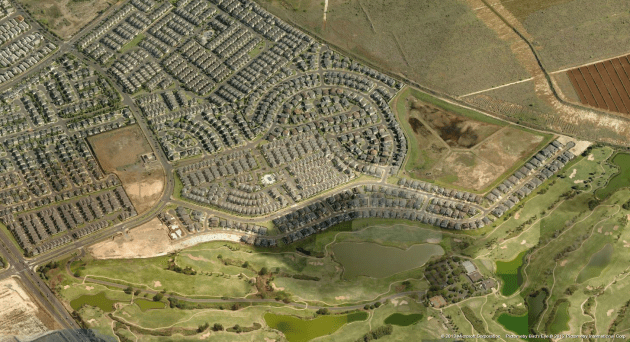
Ewa SubdivisionSubdivisions are often valued via the income approach.

Ground Rent Capitalization

Due to the large amount of leasehold land in Hawaii, local appraisers frequently employ this technique to convert ground lease rents into land values.

In appraisal school, one of the first formulas taught is: Income / Rate = Value ( I / R = V )

Here is an example of how it works:

IRV Land Example

As shown, a property’s annual income can be converted to a land value if a capitalization rate, or “rate of return” as it is commonly called in Hawaii, can be derived from the market.  In this example, if an eight percent (8.0%) rate of return was applied to a ground rent of $50,000 per year, the indicated land value would be $625,000.

Land Residual

Similar to the Ground Rent Capitalization technique described above, this method converts the allocated portion of a property’s income that is attributable to the land, and again divides it by a land capitalization rate that is market derived.  Most often, this method is employed when testing the feasibility of alternative uses in highest and best use analyses.

The key difference between this technique and the one above is that income for an improved property is typically the starting point, and it must be segmented (with market support) into the income attributable to land (IL) and income attributable to the building (IB).

The following chart is an example of the Land Residual technique used for Highest and Best Use testing purposes:

H&BU - Land Residual

(Note: In my experience in Hawaii, this method is used so infrequently for market value purposes that the term “Land Residual” is most often meant by appraisers to describe Yield Capitalization/DCF/Subdivision/Development Analyses–described below)

 Discounted Cash Flow Analysis / Subdivision Development Analysis

Yield Capitalization can also be used to value land, it is sometimes referred to as one of the following techniques:

  • Discounted Cash Flow Analysis
  • Subdivision Analysis
  • Development Analysis
  • Subdivision Development Analysis
  • Yield Capitalization
  • Land Residual (Hawaii)

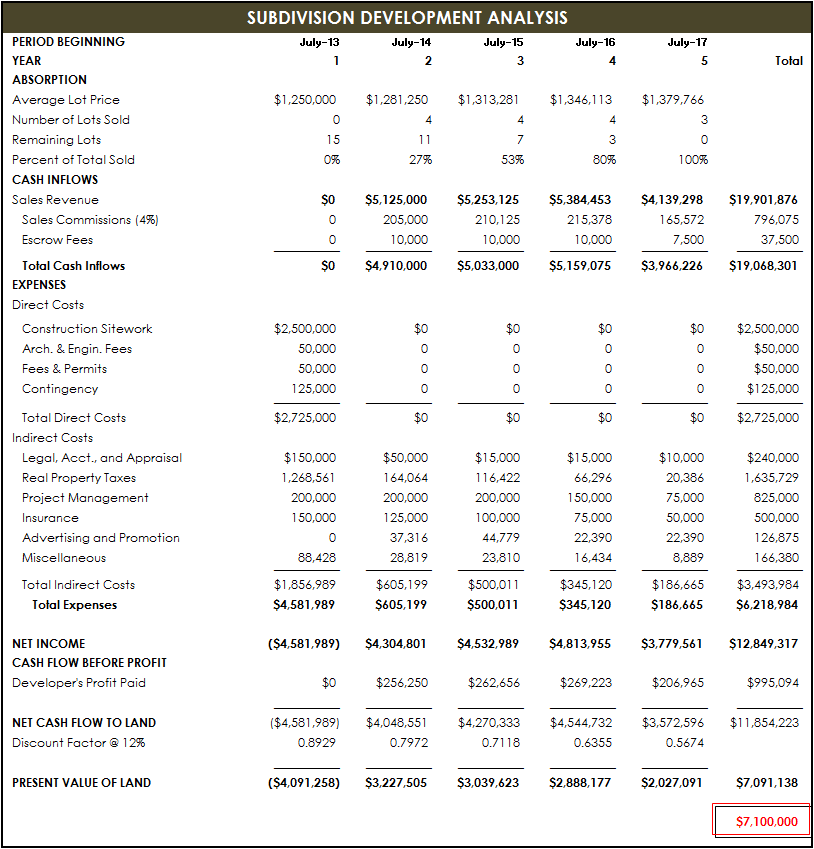
In this technique, gross sale prices are estimated and costs (such as construction, management, or developer’s profit) are deducted to arrive at net income.  This net income is then discounted to a present value estimate for the underlying land.

An example of a Subdivision Development Analysis is shown below:

DCF Example - Subdivision

Comments and/or Questions?  Please leave them in the comments section below–I’d be happy to clarify or expand.

Aloha, Chris

Hawaiki Tower Analysis – An alternative to traditional comps and adjustments.

For many appraisers in Hawaii, a common but challenging assignment is to value a single unit in a high-rise luxury condominium project.

There are dozens of luxury high-rises in Honolulu.  This article takes a look at Hawaiki Tower, a 46-story condominium with 417 residential units. It is situated immediately across the street from Ala Moana Shopping Center and benefits from highly desirable ocean views.

Hawaiki Tower HeroPhoto Credit: Mathew Ngo – REALTOR®

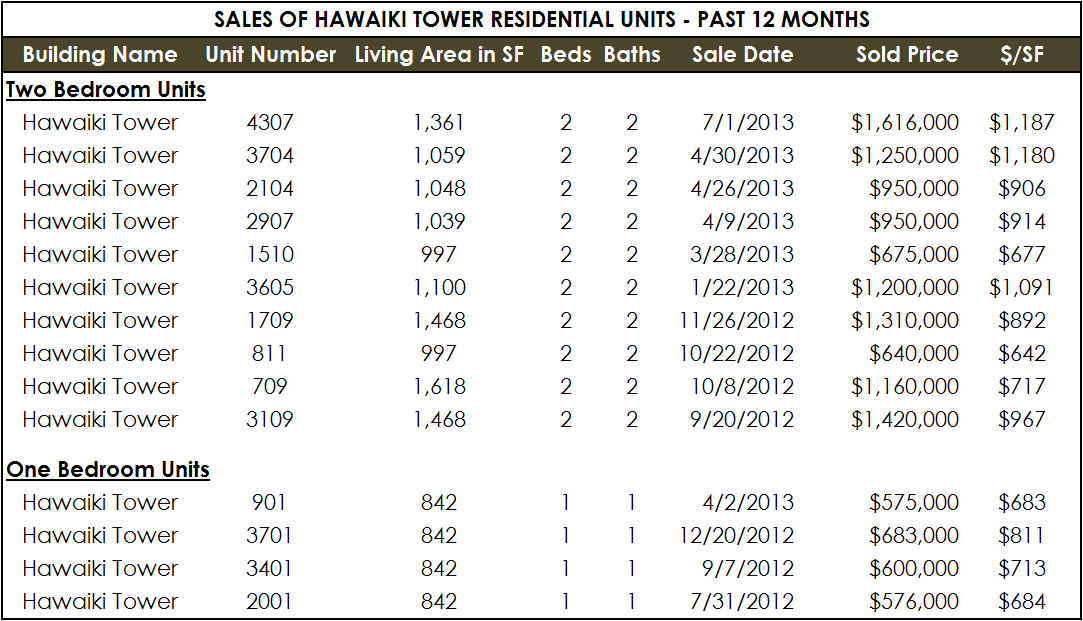
At first, it might seem straightforward to value a unit in this building.  For example, in the past 12 months, 14 residential units at Hawaiki Tower have sold, as shown in the chart below:

Hawaiki Sales - Past 12 MonthsSources:  HiCentral MLS, and Chris Ponsar, MAI

From an appraiser’s point of view, what’s not to love?  We’ve got a bunch of seemingly clean data to work with. This is largely true, but a closer look reveals the following:

  • 10 sales of two-bedroom units in the past year, and 4 sales of one bedroom units.
  • Floor levels range from 8 to 43
  • Unit sizes range from 842 to 1,618 square feet of living area.
  • Sale prices range from $575,000 to $1,616,000
  • Prices per square foot range from $642 to $1,187

In other words, sale prices and unit characteristics fall in a wider range than one might expect, and an appraiser looking at any particular unit will be challenged to provide solid market support for adjustments.  Not impossible, but definitely difficult.

Let’s look at an alternative: The Multiplier Method

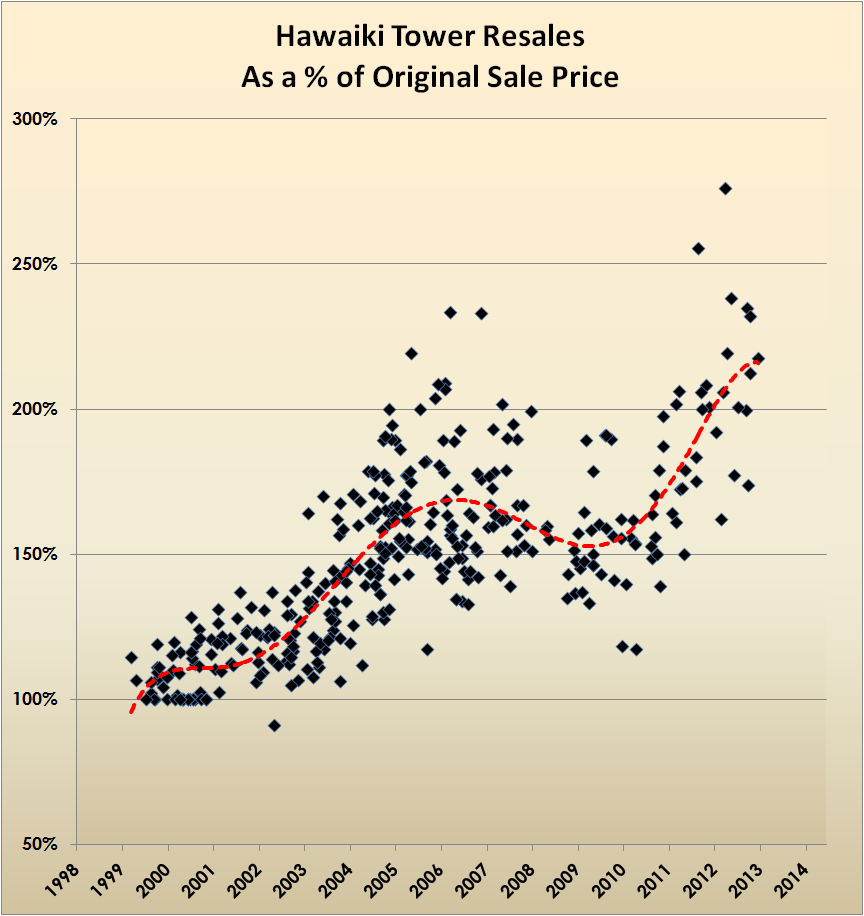
The following chart tracks resales at Hawaiki Tower since construction completion in 1999.

Hawaiki Resale as pctSources:  HiCentral MLS, Hawaii Information Service, and Chris Ponsar, MAI

At first, this might appear to be a summary of run-of-the-mill sale prices, but it isn’t.  This chart tracks each sale price at Hawaiki Tower as a percent of its original developer’s sale price.   As shown, the 150 percent threshold was crossed sometime around 2004, with the march past 200 percent taking shape in 2012. (We’re definitely getting into appraiser geek stuff here)

The benefits of this approach are rooted in the idea that when Hawaiki Tower was first completed and sold out in 1999-2001 (a time of relatively stable pricing where almost 75 percent of the project closed in the first 12 months after completion), the developer and more than 400 buyers came to individual agreements on price.  Buyer preferences for items such as ocean view, unit size, floor level, floor plan, etc are “baked in” to the original developer closing prices.

If we take another look at the Hawaiki Tower sales from the previous 12 months, a tighter trend reveals itself in the “% of original price” and “multiplier” columns:

Hawaiki Multiplier Chart

In the prior 12 months, on average, the 10 two-bedroom sales at Hawaiki Tower traded for 2.2x their original sale prices.  One-bedroom units are trailing a bit, selling for about 1.9x the original developer’s price–a possible indication that one-bedroom units are less desirable, in comparison to two-bedroom units, than they were in 1999, a market preference that many real estate agents and appraisers have observed.

What does it all mean?

Based on the sales activity at Hawaiki Tower over the past 12 months, units have closed in the range of 1.6-2.8x original prices, with most activity happening in the 1.9-2.3x range.  As a property owner, real estate agent, or other professional interested in market value, it would seem reasonable to set value expectations in these ranges.

If you’re interested to know what your unit sold for originally in the 1999-2001 sell out period, send me a note and I’ll zip it over to you (the whole 400-unit list seems a bit overwhelming for this article).  Alternatively, you can look up the public record sales activity for any property on Oahu at http://www.honolulupropertytax.com.  Go to the property search tab and enter your address or tax map key if you know it (again, drop me a line if I can help).

Comments and/or Questions?  Please leave them in the comments section below–I’d be happy to clarify or expand.

Aloha, Chris